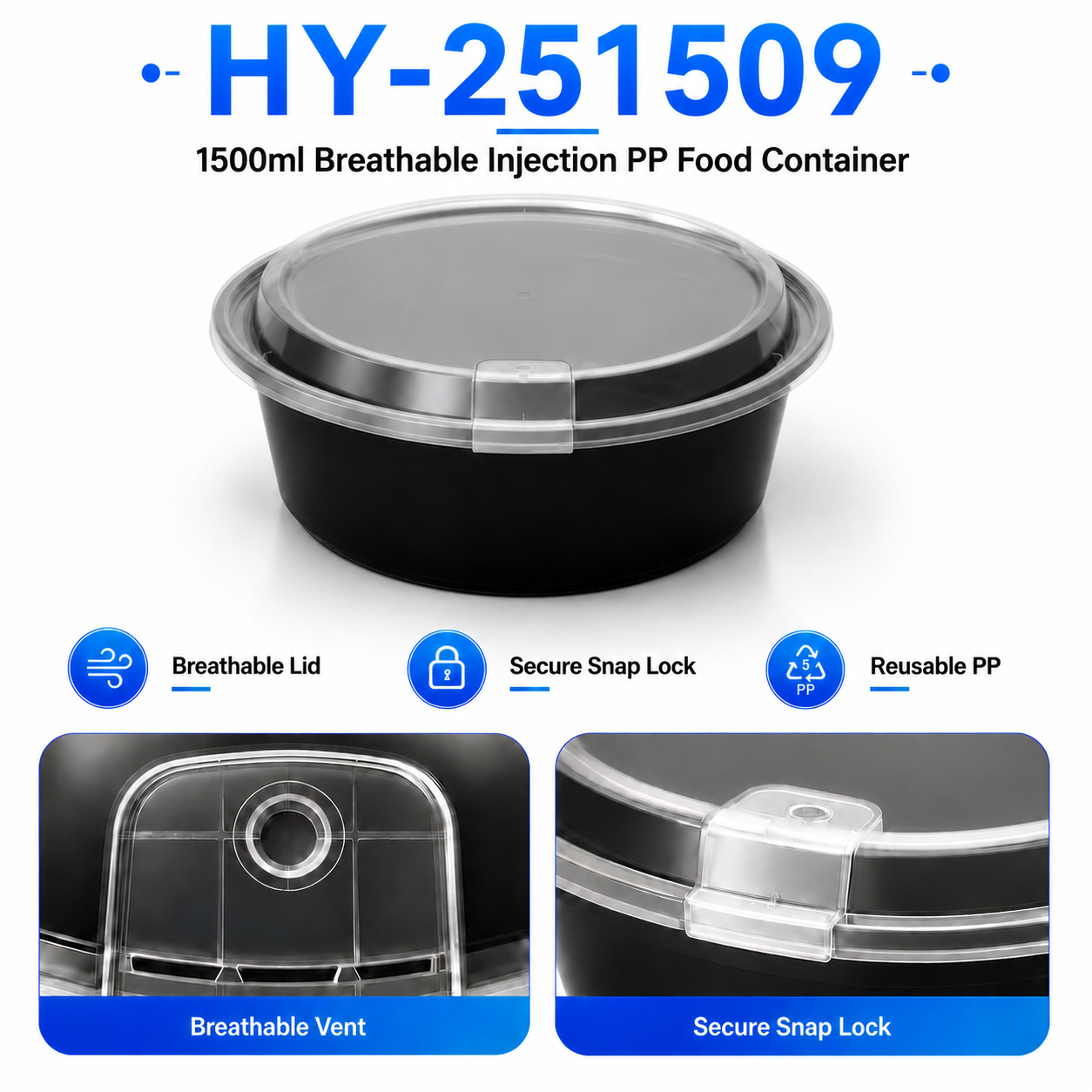
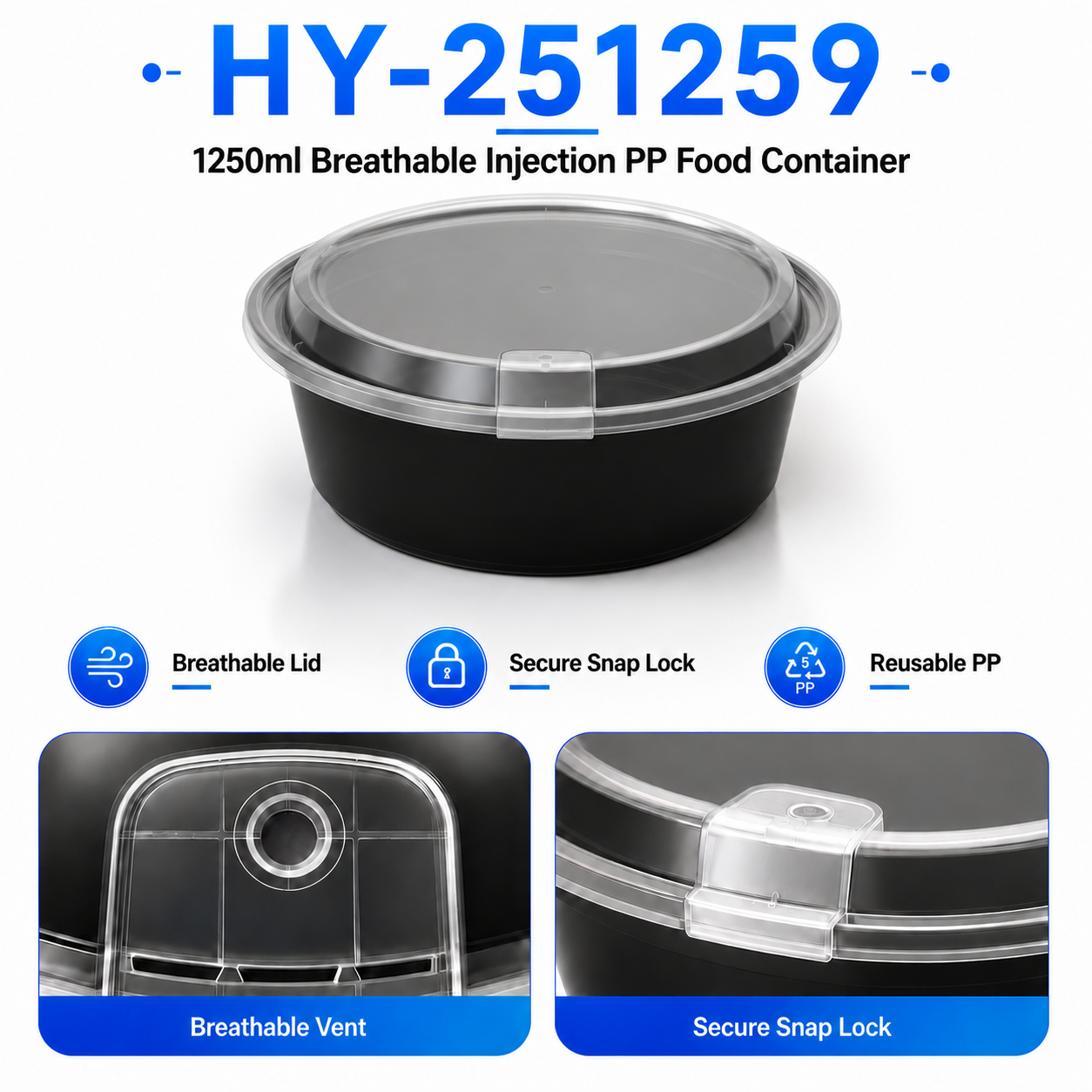
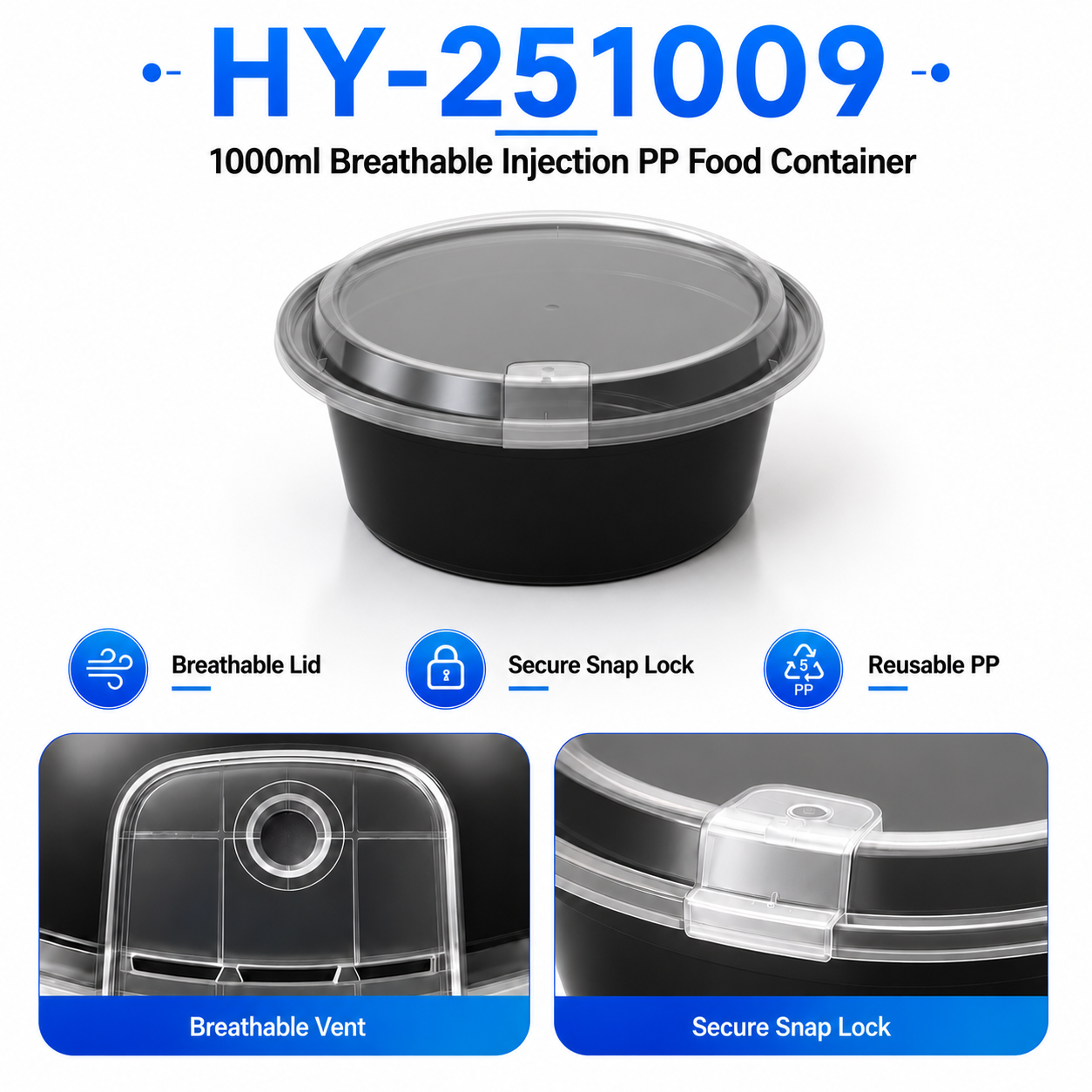
MFPP Disposable Food Container: A Complete Guide to Molded Fiber Polypropylene One-Piece Meal Boxes
Introduction: The New Generation of Sustainable Food Packaging
The rapid growth of takeaway food, meal delivery services, catering businesses, and ready-to-eat food markets has created increasing demand for disposable food containers that combine durability, safety, and environmental responsibility. Traditional plastic containers have been widely used because of their excellent strength and heat resistance, while molded fiber packaging has gained popularity because of its renewable material advantages. However, both solutions have limitations when applied to demanding foodservice environments.
MFPP disposable food containers, also known as molded fiber polypropylene containers, represent a new approach to sustainable food packaging. By combining fiber-based materials with polypropylene performance characteristics, MFPP one-piece food containers provide a balance between structural strength, moisture resistance, heat stability, and reduced material consumption.
For restaurants, food manufacturers, catering companies, and packaging distributors, MFPP containers offer a practical solution that meets real-world requirements without sacrificing user experience.
What Is an MFPP Disposable Food Container?
MFPP stands for Molded Fiber Polypropylene. It is an advanced composite packaging material that combines molded fiber structures with polypropylene (PP) components to create strong and lightweight food containers.
Unlike conventional PP food containers made entirely from petroleum-based plastic, MFPP uses fiber reinforcement to improve structural performance while reducing the amount of traditional plastic material required.
The basic structure of an MFPP container includes:
Molded fiber materials that provide rigidity and lightweight support
Polypropylene components that improve moisture resistance and durability
Food-grade additives designed for safety and performance
Surface treatments that enhance grease and liquid resistance
The result is a disposable meal box that can handle hot food, sauces, oily meals, and transportation conditions more effectively than many traditional fiber-only alternatives.
MFPP is increasingly considered a next-generation packaging material because it focuses on performance improvement rather than simply replacing one material with another.
How Does an MFPP One-Piece Food Container Work?
The working principle of MFPP packaging is based on composite material engineering.
The fiber structure provides mechanical reinforcement, similar to how natural fibers strengthen composite materials in other industries. The polypropylene component acts as a bonding and protective layer, improving:
Water resistance
Oil resistance
Temperature stability
Impact strength
Product consistency
When food is placed inside the container, the fiber structure helps maintain the overall shape, while the polypropylene matrix prevents rapid moisture penetration and reduces deformation.
This combination allows MFPP containers to perform well in applications such as:
Hot meal packaging
Rice and noodle boxes
Fried food packaging
Ready-to-eat meals
Airline catering
Restaurant takeaway packaging
The key advantage is that MFPP is engineered around actual foodservice requirements rather than only focusing on appearance or sustainability claims.
Manufacturing Process of MFPP Disposable Food Containers
Producing high-quality MFPP food containers requires expertise in material preparation, mold design, and production control.
1. Material Preparation
The first step is preparing the fiber and polypropylene components according to the required container specifications.
Manufacturers must carefully control:
Material ratio
Fiber quality
Moisture content
Additive compatibility
A stable material formulation directly affects the final container’s strength, appearance, and food-contact performance.
2. Mold Design and Forming
One of the most important parts of MFPP container production is precision mold development.
A professional manufacturer considers:
Container shape
Wall thickness
Stacking design
Lid structure
Compartment layout
User handling requirements
One-piece food containers require accurate molding technology because the container body and functional structures must maintain consistent performance during production.
3. Heat and Pressure Forming
During the molding process, controlled heat and pressure shape the MFPP material into the final container design.
This process creates:
Strong sidewalls
Smooth surfaces
Reliable sealing areas
Stable dimensions
Advanced manufacturing control helps ensure that every batch meets consistent quality standards.
4. Quality Inspection
Professional MFPP food container production includes multiple inspection stages.
Typical quality checks include:
Appearance inspection
Dimension measurement
Leakage testing
Compression testing
Heat resistance testing
Food-contact safety verification
For global food packaging buyers, quality consistency is as important as the material itself.
Key Advantages of MFPP Food Containers
1. Strong Structural Performance
Food containers must survive transportation, stacking, and handling. Weak packaging can cause leakage, deformation, and customer complaints.
MFPP containers provide improved rigidity compared with many traditional molded fiber products.
Benefits include:
Better stackability
Improved shape retention
Higher resistance during delivery
Reduced risk of container collapse
This makes MFPP suitable for modern food delivery systems where packaging performance directly affects customer satisfaction.
2. Heat Resistance for Hot Food Applications
Many foodservice customers require containers that can handle freshly cooked meals.
MFPP technology provides improved thermal performance compared with standard paper-based packaging.
Typical applications include:
Hot rice meals
Pasta dishes
Fried foods
Meat products
Microwave-ready meals
The ability to maintain structure under heat is a major reason why food companies consider MFPP as an alternative packaging solution.
3. Better Moisture and Grease Resistance
One of the biggest challenges of fiber-based packaging is controlling liquid and oil penetration.
MFPP improves resistance against:
Cooking oil
Sauces
Water vapor
Food moisture
This helps maintain food quality and improves consumer experience.
4. Lightweight and Material Efficient Design
Reducing packaging weight can provide advantages throughout the supply chain.
A lighter container can help reduce:
Transportation costs
Storage requirements
Material consumption
For large foodservice operators, these improvements can create significant operational benefits.
MFPP vs Traditional Food Packaging Materials
MFPP vs PP Plastic Containers
Traditional polypropylene containers remain widely used because they offer excellent durability and low production costs.
Advantages of traditional PP containers:
High strength
Excellent moisture resistance
Mature manufacturing technology
Good heat performance
However, customers increasingly evaluate packaging based on sustainability goals.
MFPP provides a more balanced option by combining polypropylene functionality with fiber-based material advantages.
For companies looking to reduce dependence on conventional plastic packaging while maintaining performance, MFPP offers a practical alternative.
MFPP vs Bagasse Food Containers
Bagasse containers made from sugarcane fiber are popular in the sustainable packaging market.
Advantages:
Renewable raw material
Natural appearance
Strong sustainability image
Limitations:
Lower moisture resistance in some applications
Reduced durability for certain foods
Performance variation between suppliers
MFPP generally provides better protection when packaging oily, wet, or hot foods.
MFPP vs Molded Fiber Containers
Traditional molded fiber packaging is widely recognized as an environmentally friendly option.
However, some fiber-only containers may require additional coatings to improve:
Water resistance
Oil resistance
Shelf stability
MFPP integrates polypropylene performance into the material structure, creating improved reliability for demanding food applications.
Real Manufacturing Experience: Developing Reliable MFPP Packaging Solutions
In practical packaging development, selecting a material is only the first step. Successful MFPP container projects require cooperation between material engineers, mold designers, production teams, and quality inspectors.
During product development, experienced manufacturers typically evaluate:
Food type
Filling temperature
Transportation distance
Stacking requirements
Customer usage environment
For example, a restaurant chain requiring takeaway containers for hot meals may prioritize heat resistance and leak prevention, while a supermarket ready-meal supplier may focus more on shelf presentation and dimensional stability.
Through prototype testing and production optimization, manufacturers can adjust:
Container thickness
Structural design
Lid performance
Material composition
This practical development experience is essential because sustainable packaging must work efficiently in real commercial environments.
How to Choose a Reliable MFPP Food Container Manufacturer
Choosing the right supplier is critical for companies purchasing disposable food packaging internationally.
A professional MFPP manufacturer should provide:
Manufacturing Capability
Look for suppliers with:
Stable production capacity
Advanced molding equipment
Experienced technical teams
Consistent quality management
Product Customization
Many businesses require customized solutions, including:
Container sizes
Compartments
Branding options
Packaging design
OEM and ODM capability can help brands create products that match their market positioning.
Quality and Compliance Support
Reliable suppliers should provide:
Material specifications
Food-contact documentation
Quality inspection records
Production traceability
Transparency builds trust and reduces risks for international buyers.
Future Trends of MFPP Sustainable Food Packaging
The food packaging industry is moving toward solutions that combine sustainability with real performance.
Future MFPP development trends include:
Increased Renewable Content
Manufacturers are continuously exploring ways to increase fiber content while maintaining strength and safety.
Improved Circular Packaging Solutions
Future innovations will focus on better material recovery, recycling systems, and lower environmental impact.
Customized Packaging Designs
Food brands increasingly require packaging that supports:
Premium appearance
Brand identity
Functional convenience
MFPP technology provides flexibility for customized food packaging applications.
Conclusion: MFPP Containers Provide a Practical Future for Disposable Food Packaging
MFPP disposable food containers represent an important development in the evolution of sustainable packaging. They combine the lightweight advantages of fiber materials with the durability and protection characteristics of polypropylene.
Compared with traditional PP containers, MFPP provides opportunities for material optimization. Compared with fiber-only packaging, it delivers improved performance for demanding food applications.
For restaurants, catering companies, food manufacturers, and packaging distributors, MFPP one-piece food containers offer a reliable balance of strength, safety, and sustainability.
As global food packaging requirements continue to evolve, MFPP technology will play an increasingly important role in creating practical and responsible disposable packaging solutions.